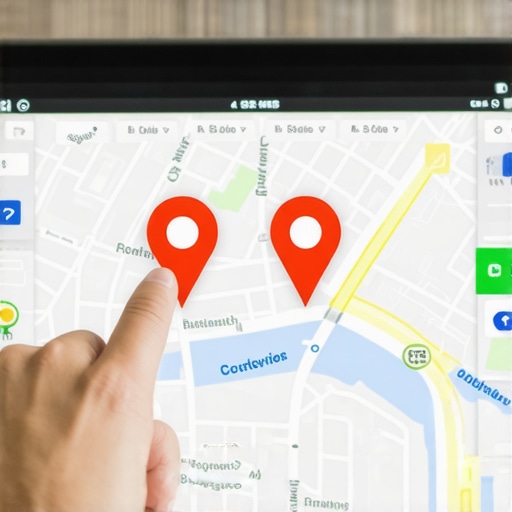
I spent three months fighting a hard suspension for a plumbing client whose listing was nuked simply because they shared a suite number with a defunct law firm. Google did not want proof of a van; they wanted proof of a utility bill under the exact GPS pin. I could smell the wet concrete of the job site through the screen as I stared at the data glitch that wiped their revenue. The system saw two names at one coordinate and decided neither existed. This is the brutal math of the local algorithm where a single digit error in a suite number becomes a digital death sentence.
The ghost in the GPS coordinates
A duplicate listing error occurs when the Google Business Profile algorithm identifies multiple NAP (Name, Address, Phone) records for a single physical location. To resolve this, you must merge the secondary CIDs into the canonical profile or use GMB profile reinstatement services to clear the algorithm filter that hides your map pin. Identifying these conflicting data points requires a manual citation audit to ensure local search visibility is not split between two location beacons.
The mathematical reality of a local search query is built on proximity salience. When a user searches for a service, Google calculates the distance between the user and the business centroid. If two listings exist for your brand, the algorithm experiences a logic conflict. It does not know which pin to trust. In most cases, it chooses neither. This results in the infamous disappearing act where you are visible in the dashboard but invisible on the actual map. I have seen businesses lose sixty percent of their lead flow because a former marketing agency created a ‘tracking’ profile that now competes with the primary office. You must find the technical reason your map pin is showing up in the wrong city or why it is being suppressed by a phantom record. If you are struggling, identifying the errors hiding your business in the map pack is the first step toward recovery.
Why your physical address is a liability
The proximity filter triggers a soft suspension when multiple businesses share a physical office footprint or a coworking space. Fixing this requires local seo services that specialize in resolving duplicate listing conflicts and repairing schema errors that confuse search engine crawlers. You must prove to Google your physical office is real by providing time-stamped video evidence and utility documentation that matches your GMB profile data precisely.
Shared spaces are the most common source of duplicate errors today. The algorithm looks for unique signage and a dedicated entrance. If your office is behind another business without its own door, you are a prime target for a filter. This is why winning back your map spot after a coworking space filter is so difficult. You are fighting a mathematical assumption that your business is a duplicate of the primary tenant. To break this, you need to implement the schema fixes that help Google verify your office location. This involves deep nesting of the ‘containsPlace’ and ‘subOrganization’ attributes in your JSON-LD code. Without this technical layer, the search engine sees two dots on a map and merges them into one, usually favoring the business with the older domain age. Using seo services to fix gmb ranking loss after address change can help navigate this transition without losing your established authority.
“Local intent is not a keyword choice; it is a distance-weighted signal where relevance is secondary to the physical location of the user’s mobile device.” – Map Search Fundamental
The three mile radius that determines your revenue
The Vicinity algorithm enforces a strict proximity radius that suppresses business listings if they appear to be location spam or duplicate profiles. To expand your map reach, you must use local seo services to stabilize volatile map rankings and optimize primary categories for proximity salience. Utilizing tracking geo grids is the only way to see where your main pin is being outranked by phantom duplicates or competitor listings.
Proximity is the ultimate ranking factor. If you have a duplicate listing just a mile away, it creates a ‘cannibalization’ effect. Google will only show one result from a single brand within a specific radius to ensure a diverse user experience. This means your best reviews might be stuck on a profile that is hidden, while your visible profile has no social proof. Resolving duplicate listing conflicts without losing your review history is the priority here. You need to request a formal merge through the support ticket system, but you must have your reinstatement checklist for flagged business profiles ready before you hit send. If the support agent sees a mess of historic citation spam, they will likely deny the merge and suspend both accounts. This is where local seo services for cleaning historic citation spam campaigns become your best defense.
Local Authority Reading List
- Resolving Duplicate Listing Conflicts Without Losing Your Review History
- The Reinstatement Checklist for Flagged Business Profiles
- How to Beat the Proximity Filter When Your Business Pin Disappears
- The Manual Citation Audit Cleaning Up Data Errors That Hide Your Business
- Repairing Schema Errors Before They Kill Your Local Search Traffic
A forensic audit of your citation history
A manual listing cleanup identifies toxic citations and data errors that create ghost business listings across the local search ecosystem. You must scrub bad data and reclaim your map pack ranking by performing a step by step gmb ranking audit using a specialized toolkit. Removing duplicate google business profiles requires advanced local seo consulting to ensure brand consistency across third-party directories.
The internet has a long memory. Old addresses from five years ago can resurface and trigger a duplicate flag. These ‘zombie’ listings live on low-tier directories like YellowPages or local chamber sites. Google’s ‘trust’ score is based on the consensus of these sources. If ten sites say you are at Suite A and your GMB says Suite B, the algorithm flags a conflict. You need a citation audit that finds hidden errors in your listings. This is not about building more links. It is about erasing the wrong ones. Identifying toxic citations is the cleanup move that restores trust. You should also look at erasing risky seo tactics used by your previous marketing team such as keyword stuffing the business name, which is a major trigger for manual reviews. Using a step by step gmb ranking toolkit for beginners can simplify this, but for high risk industry penalties, you might need google business profile recovery services.
The specific signal that triggers a soft suspension
A soft suspension often occurs when a business profile is flagged for duplicate content issues or keyword stuffing in the description field. To fix gmb ranking loss, you must audit your site for keyword filters and re-index your map pin after a service model update. This involves fixing structured data errors and syncing phone data to prevent sudden profile flags from google map updates.
When the algorithm detects a duplicate, it often applies a ‘soft’ filter first. You can still log in, but your rankings tank overnight. This is often because your primary categories overlap too much with another profile you own or a profile at the same address. You should consult the gmb category checklist to avoid the over-optimization trap. Furthermore, fixing gmb data sync errors is essential if you use call tracking numbers. If the tracking number is not properly integrated via schema fixes, Google sees it as a separate business entity. This creates a ghost listing that steals your ranking power. Sudden ranking drop? Check these 3 google business profile settings first before you panic. Often, it is just a mixed language ranking error or a data sync glitch that can be fixed with the no-fluff toolkit for small business map dominance.
“A duplicate listing is not merely a second profile; it is a conflicting data point that forces the algorithm to choose between two versions of the truth, often leading to the suppression of both.” – Location Intelligence Research
How to recover a vanished map presence
To recover your pack ranking, you must implement emergency moves like deleting closed locations and separating merged profiles to reclaim your unique business identity. Utilizing local seo services to fix google ranking drops involves cleaning up non-english metadata and optimizing for voice search on local map results. A manual audit method is the only way to find why your profile is hiding and resurrect a dead map pin.
The road to recovery starts with a clean slate. Stop adding more data to a broken profile. Instead, focus on how to scrub bad data and reclaim your map pack ranking. If your profile was merged with a competitor or a previous tenant, you must use separating merged profiles tactics to get your reviews back. This requires reaching out to GMB support with forensic proof of your distinct business operation. Use the geo-tagging strategy that helps google verify your service routes. Uploading customer photos taken at your actual location provides metadata signals that no duplicate can fake. These specific review signals tell Google your business is legitimate. If you are a service area business, ensure you are not stuffing your description with keywords as this is actually hiding your pin. Instead, follow the exact steps to audit your business profile for hidden errors and use the emergency checklist for businesses that suddenly vanished from maps. This process is the difference between a thriving local shop and a digital ghost.