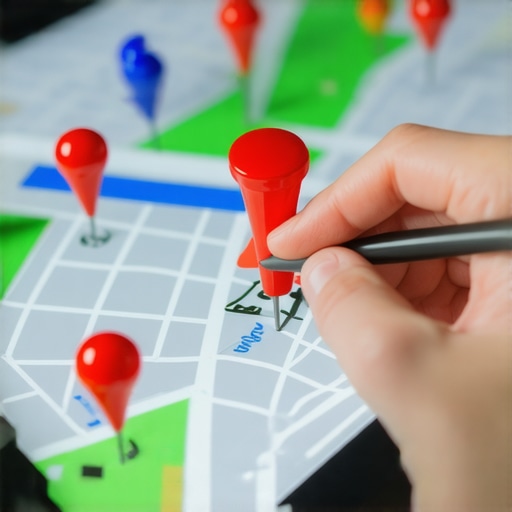
The smell of wet concrete after a summer storm always reminds me of the day a storefront vanishes from the digital world. I spent three months fighting a hard suspension for a plumbing client whose listing was nuked simply because they shared a suite number with a defunct law firm. Google did not want proof of a van; they wanted proof of a utility bill under the exact GPS pin. As a street photographer of the digital local layer, I see the glitches others miss. I see the candidate photo that proves a business is real while others rely on stale stock images. When your ranking crashes, it is not a mystery. It is a forensic trail of spatial data and behavioral signals that have suddenly disconnected from the local trust graph.
The ghost in the GPS coordinates
GPS coordinates and latitude signals are the foundation of local search visibility within the Google Map Pack. If your physical location data does not align with user proximity and NAP consistency, your business profile will trigger a proximity filter or a ranking drop after a local algorithm shake up. Precision in coordinate mapping is the only way to recover positions and maintain local search growth.
A business pin is more than a dot on a map; it is a mathematical weight in a spatial database. I have seen rankings vanish because a business moved three doors down but failed to update their 12th-decimal-point coordinates. The algorithm sees this as a trust gap. You might think a small move is harmless, but the logic of why address changes kill rankings and the audit that fixes it reveals a deeper sensitivity. When the pin moves, the proximity radius shifts. If your business was the centroid of a neighborhood, moving even a block can place you behind a competitor who stayed put. The math of local search is ruthless. It calculates the distance between the searcher’s mobile device and your verified front door. If that distance increases, your relevance score drops unless your review sentiment is strong enough to pull searchers across that gap.
Why your physical address is a liability
Google Business Profile verification depends on proving a physical office is real and active through utility bills, signage photos, and official documents. Using a virtual office or coworking space often leads to a policy violation and profile suspension. Successful reinstatement requires showing permanent signage and exclusive business access to restore lost local visibility in search results.
The era of the