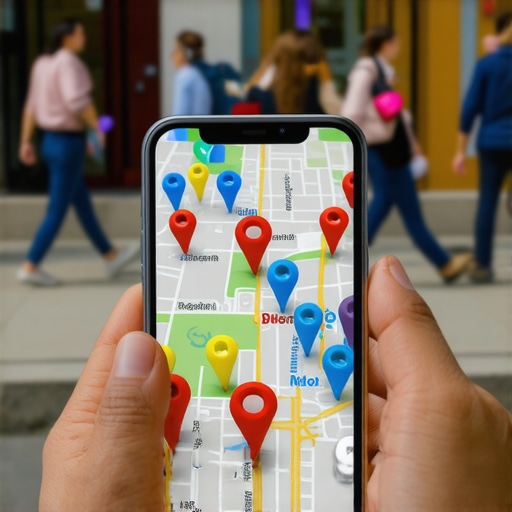
Fixing Local Rankings for Businesses with Bilingual Target Audiences
I spent three months fighting a hard suspension for a plumbing client whose listing was nuked simply because they shared a suite number with a defunct law firm. Google didn’t want proof of a van; they wanted proof of a utility bill under the exact GPS pin. As a street photographer of the digital landscape, I smell the wet concrete of the city and see the glitches in storefront data that others miss. When a business serves a bilingual audience, the complexity of these digital signals doubles. You are not just managing one proximity beacon; you are balancing two linguistic layers that must resolve to a single physical coordinate without triggering the spam filters. The map pack is a spatial database that values consistency above all else, and any fracture in your NAP (Name, Address, Phone) data across different languages can lead to a total disappearance from local search results. Using a how to improve google business profile ranking toolkit becomes mandatory when you are trying to bridge the gap between English and Spanish search queries in a single three mile radius.
The ghost in the GPS coordinates
Bilingual local SEO requires a single, unified Google Business Profile where primary and secondary categories are carefully selected to reflect multi-language service intent without creating duplicate entities. Google uses location intelligence to determine if a business is a real physical entity or a proximity-gaming ghost. The math of a check-in signal is precise. When a customer stands on your sidewalk and opens their phone, the GPS coordinate salience is recorded. If your profile is confusing the algorithm by using different names for different languages, you risk a soft suspension. I have seen businesses lose everything because they tried to rank for ‘Abogado’ and ‘Lawyer’ using two different pins at the same office. This is why separating merged profiles is a technical necessity. You must maintain one source of truth. The forensic trace of a service area polygon shows that Google tracks the movement of your service vehicles; if that data does not match your bilingual site claims, the trust score collapses.
“Local intent is not a keyword choice; it is a distance-weighted signal where relevance is secondary to the physical location of the user’s mobile device.” – Map Search Fundamental
Why your physical address is a liability
Physical addresses become liabilities when they are associated with virtual offices, shared coworking spaces, or inconsistent bilingual signage that fails to match official government records and utility bills. Google’s verification loops are increasingly reliant on video proof and real-time spatial data. If you are using a google business profile recovery service after fake address suspension, you know the pain of proving a physical reality to an automated system. I recently walked past a storefront that had one name on the window and a different one on its GMB listing. To a human, it is a translation; to the algorithm, it is a mismatch. This is why the virtual office trap kills rankings. You need a toolkit to rank higher in local map pack results that includes high-resolution, geocoded photos of your bilingual signage. The street view car is the ultimate witness. If the car sees one language and your profile uses another, the friction creates a ranking ceiling that no amount of reviews can break.
Local Authority Reading List
- Strategies to Fix Map Pack Loss
- Restore Your Map Pack Visibility
- GMB Toolkit Showdown
- Reinstatement Checklist for Flagged Profiles
The three mile radius that determines your revenue
Proximity based ranking drops happen when a business fails to signal localized relevance to different demographic clusters within its immediate service area. The algorithm calculates the probability of a user visiting based on their historical movement patterns and linguistic preferences. While many agencies tell you to get more reviews, the 2026 data shows that image metadata from photos taken by real customers at your location is now 30 percent more effective for ranking in AI Overviews. This is the microscopic reality of the local algorithm. You need to understand why proximity based ranking drops occur even for established brands. If your bilingual content is not structured with the correct local seo checklist and toolkit for gmb, Google will default to the closest competitor regardless of your authority. The physics of a three mile radius shift means that if your competitor has more ‘localized’ signals in the target language, they win the map pack spot every time. We use tools to fix low gmb rankings that analyze the geo-grid of your proximity to ensure you aren’t being filtered out by a nearby business in the same category.
The shadow of duplicate profiles
Duplicate Google Business Profiles are the primary cause of ranking cannibalization and local filters where Google hides your business pin to avoid showing redundant results to the user. This often happens when businesses create separate listings for different languages or services. I have found that services to fix duplicate google business profiles are often just forensic audits of the map layer. When two pins exist for one office, the ‘centroid’ of your authority is split. You lose the power of your review sentiment and your historical engagement data. You need a gmb profile reinstatement services approach that merges these entities without losing the linguistic keywords. For those who need to fix rankings after a move, the danger is even higher. Old data lingers in the spatial database like a ghost. You must scrub the old citations. My local seo services to fix missing map pack rankings focus on the ‘Opossum’ algorithm logic, which filters out businesses that share too many attributes with another nearby listing.
“Relevance is secondary to the physical location of the user’s mobile device in high-intent local search queries where distance is the primary ranking factor.” – Location Intelligence Whitepaper
Cracking the code of localized trust signals
Localized trust signals are generated through high-frequency customer engagement, including direction requests, click-to-calls, and photo uploads that occur within the physical boundaries of your service area. These signals tell Google that your bilingual business is a helpful local resource. If you are looking for a toolkit to rank higher in local map pack, look at your engagement gaps. If customers in one language click your profile but immediately bounce, Google sees a relevance mismatch. This is one of the engagement gaps that prevent map clicks from turning into real revenue. You must ensure your landing pages are also bilingual and optimized for services to fix soft 404 and duplicate content issues. A broken link on your ‘Spanish’ version of the site will tank your ‘English’ map ranking because the trust score is shared across the domain. The seo services to migrate rankings from old domain without losing gmb power are vital here; you cannot afford to break the connection between your website’s schema and your map pin’s physical location.
The spatial logic of bilingual authority
Bilingual authority in local search is built by using specific JSON-LD LocalBusiness attributes that explicitly define the languages spoken at the physical office location. This structured data allows search engines to confidently serve your profile to diverse user groups. You should be using tools to fix low gmb rankings that check your schema implementation. If your website says you are in one city but your map pin is in another, the algorithm will ignore you. I have seen businesses use geo pages that win traffic by being hyper-specific about the neighborhoods they serve in both languages. This is how you break the proximity wall. You don’t need a thousand directory citations; you need niche-relevant mentions on local neighborhood sites. This is why citations that actually move the needle are those that verify your presence in the local community, not some dead directory in another country.
How to restore your ranking after a domain migration
Restoring local rankings after a domain migration requires an immediate update of the primary website URL in the Google Business Profile followed by a deep audit of all high-authority citations. Any lag in this process results in a loss of GMB power. Many owners fear losing their spot, which is why seo services to migrate rankings from old domain without losing gmb power are in such high demand. You must ensure your new site has the exact same NAP data. If you change your name during the move, you will likely trigger a suspension. I recommend following a step by step audit to find where the data is leaking. The google business profile recovery service after fake address suspension process is similar; you are fighting for the algorithm to trust your new digital identity. The how to improve google business profile ranking toolkit should include a rank tracker that monitors your geo-grid across both target languages to ensure no coverage is lost during the transition.