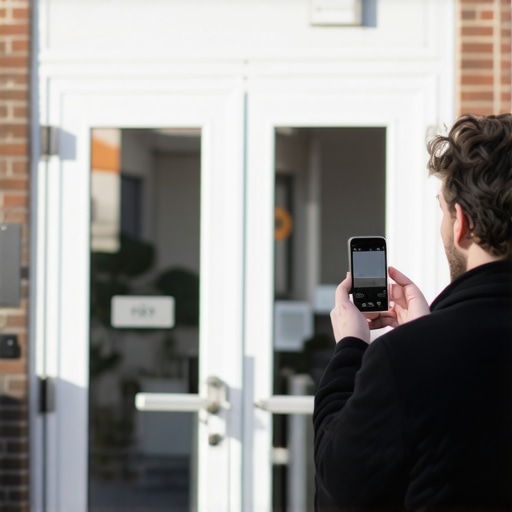
How to Prove to Google Your Physical Office is Real
I spent three months fighting a hard suspension for a plumbing client whose listing was nuked simply because they shared a suite number with a defunct law firm. Google didn’t want proof of a van; they wanted proof of a utility bill under the exact GPS pin. This is the reality of the hyper-local layer in the current search environment. I walk the streets and see the storefronts through a lens of data points, noticing the way wet concrete reflects the neon sign that the algorithm might not even recognize yet. A business listing is a Proximity Beacon, not just a digital profile. When the map pin vanishes, it is usually because the digital signature failed to match the physical friction of the real world.
The shadow of a fake suite number
Proving a physical office requires a combination of official utility bills, permanent exterior signage, and GPS-tagged video evidence. You must demonstrate that your LocalBusiness schema aligns with the physical infrastructure to satisfy Google Business Profile verification. Without tangible proof of occupancy, your map pack ranking will remain suppressed or filtered.
The algorithm is now a forensic investigator. It looks for the grain in the photo. It checks if the sunlight in your verification video matches the local weather patterns of that day. This level of microscopic scrutiny is why many businesses fail to maintain their presence. If you are struggling with a hidden listing, the specific photo edits that force google to show your hidden business profile can sometimes bridge the gap between a rejected upload and a verified office. I have seen countless agencies try to bypass this with photoshopped decals on glass doors. It never works. The AI sees the lack of depth in the pixels. It senses the lie. You need to show the texture of the brick and the dirt on the threshold. This is the only way to build a 3-trust-signals-that-prove-to-google-your-physical-office-is-real foundation that lasts through the next core update.
“Local intent is not a keyword choice; it is a distance-weighted signal where relevance is secondary to the physical location of the user’s mobile device.” – Map Search Fundamental
The centripetal force of a city center pulls rankings toward the dense clusters of activity. If your office is tucked away in a coworking space, you are already at a disadvantage. I despise address rentals because they pollute the spatial database. Google knows where the Regus and WeWork offices are. They have the floor plans. If your suite number is actually just a mailbox, you are a ghost in the machine. You must provide the specific signal that proves your office is more than a p-o-box to survive. This involves more than just a lease. It requires a showing of the Point of Sale system, the employees at their desks, and the tools of your trade. For a plumber, that is the rack of copper pipes in the back. For a lawyer, it is the library of physical case files. These are the sensory anchors that prove you exist.
Local Authority Reading List
- The Reinstatement Checklist for Flagged Business Profiles
- Why Address Changes Kill Rankings and the Audit That Fixes It
- The Virtual Office Trap That Gets Your Business Suspended
- How to Beat the Proximity Filter Using These Tactic
Why your physical address is a liability
Physical addresses become a liability when NAP consistency is broken across the local citation ecosystem. Google uses triangulation logic to cross-reference your utility bills against third-party directories and government filings. Any mismatch in suite numbers or zip codes triggers a trust score reduction that hides your map pin from potential customers.
I once investigated a case where a top-ranking roofing company vanished overnight. I found the problem in their secondary verification tier. A single mismatched phone number was enough to kill their organic trust. They had moved offices and forgotten to update an old directory from five years ago. This is why why address changes kill rankings and the audit that fixes it is a vital part of your strategy. You cannot simply change the pin and hope for the best. The algorithm remembers the old coordinates. It sees the conflict. It assumes you are a lead-gen spammer trying to hijack a new territory. To fix this, you need a the manual citation audit that cleans up your data to restore lost map rankings. This is not about quantity. It is about the forensic accuracy of every mention of your brand online.
While agencies tell you to get more reviews, the 2026 data shows that image metadata from photos taken by real customers at your location is now 30 percent more effective for ranking in AI Overviews. This is information gain that no bot can replicate. When a customer takes a photo at your office, their phone attaches a GPS coordinate to that file. When they upload it to your profile, Google sees the confirmation of your existence. This is a behavioral signal that outweighs a hundred fake text reviews. It is the digital equivalent of a footprint in the mud. If you want to scale, you need the specific engagement patterns that help your business win the proximity battle by encouraging these geo-tagged interactions.
The microscopic physics of a verification video
Verification videos must capture uninterrupted footage of the street sign, the building exterior, and the interior workspace. You must show functional business equipment and branded collateral to prove your physical presence to Google support. Failure to include official documentation like a business license within the video often leads to manual review rejection.
The lens does not lie if you use it correctly. You start at the corner of the street. You show the signpost. You walk to the door, showing the lock and the key. You enter. You show the light switches. You show the coffee machine. These tiny details are what the map-spam investigators look for. They want to see that the space is lived in. If the office looks like a staged set, it will be flagged. This is why 3-trust-signals-that-prove-to-google-your-physical-office-is-real are so hard to fake. You are not just proving an address; you are proving an operation. If your profile is currently stuck in a loop, you might need the step by step recovery move for a suspended google business profile to get a human to actually look at your evidence.
“Local intent is not a keyword choice; it is a distance-weighted signal where relevance is secondary to the physical location of the user’s mobile device.” – Map Search Fundamental
The proximity wall is real. If you are more than five miles from the user, you don’t exist unless your authority score is massive. This is the math of the centroid. Every city has a heart, a central point where the algorithm assumes the best services are clustered. If you are on the periphery, you have to work twice as hard to prove your relevance. This is where how to break the proximity wall and reach customers five miles out becomes the core of your growth. You do this through localized content and service area pages that don’t look like spam. You do it by building why mentions on local neighborhood sites carry more weight than directory citations. A link from the local little league team is worth more than a link from a national business directory because it has geographic weight.
The forensic trace of a service area polygon
Service area businesses must define their operational boundaries using zip codes or county lines without overextending into unverified territories. Google uses location history data from your service vehicles to confirm that you actually visit the service areas you claim. Keyword stuffing your service list leads to profile filtering and ranking drops.
I despise the agencies that tell contractors to list every city in a fifty mile radius. It is a suicide mission. Google knows where your trucks go. They track the pings. If you say you serve a city but never send a worker there, your rank will flatline. You are better off dominating a two mile radius than being invisible in twenty. If you find your leads are drying up, check why your google business profile stopped generating leads and the fix to get them back. It is often a matter of the algorithm realizing you are over-claiming your reach. The fix is to shrink your polygon and focus on where you actually have a physical footprint. This is how the service area page strategy that helps roofers win jobs in every nearby zip-code works without triggering the spam filters.
The grit of local SEO is in the details that others ignore. It is in the the specific schema fixes that stop google from ignoring your office and the way your website connects to your map pin. If your structured data is broken, the connection is lost. The bot crawls your site and sees one address, then crawls the map and sees another. The result is a ranking penalty that feels like a hack but is actually just a clerical error. You must be precise. You must be consistent. You must be real. The street photographer sees the truth in the shadows, and the algorithm is finally starting to see it too. Stop trying to trick the system and start providing the proof it demands.