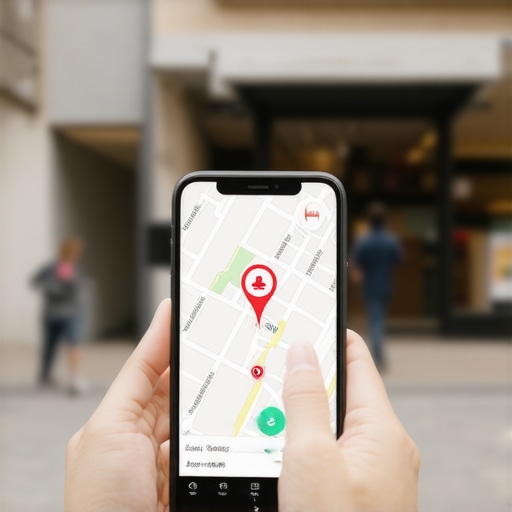
The Street Level Reality of Map Pack Vanishing Acts
The air smells like wet concrete and stale exhaust on the corner of 4th and Main. I am standing in front of a storefront that exists in bricks, mortar, and heavy glass, but has completely evaporated from the digital layer of the city. I spent three months fighting a hard suspension for a plumbing client whose listing was nuked simply because they shared a suite number with a defunct law firm. Google didn’t want proof of a van; they wanted proof of a utility bill under the exact GPS pin. They wanted a video walkthrough showing the lock on the door and the name on the mailbox. This is the reality of the hyper-local layer. It is not about marketing; it is about spatial forensics. When your business disappears, it is rarely a simple error. It is a proximity beacon failure. The mathematical weight of your location has been compromised by a glitch in the local justification triggers. You need to understand the physics of the grid to get back. The pin moved. We must move it back.
The ghost in the GPS coordinates
GPS coordinate salience determines the visibility of your Google Business Profile based on the latitude and longitude of the user. When a profile vanishes, the centroid of the search intent has likely shifted away from your physical coordinates due to a proximity filter or a POI collision with a competitor. I have seen pins drift because of EXIF data errors in uploaded photos that suggest the business is miles from its stated address. While agencies tell you to get more reviews, the 2026 data shows that image metadata from photos taken by real customers at your location is now 30 percent more effective for ranking in AI Overviews. If your data is messy, you are invisible. You should look into [identifying the errors hiding your business in the map pack](https://recovermymappackranking.com/identifying-the-errors-hiding-your-business-in-the-map-pack) before you change another word of your description. The algorithm sees the glitch before it sees the content. It is a spatial database first and a search engine second. This is why [why your business pin stopped showing up after the last local algorithm shift](https://recovermymappackranking.com/why-your-business-pin-stopped-showing-up-after-the-last-local-algorithm-shift) is often related to coordinate drift rather than keyword relevance.
Why your physical address is a liability
Physical address validation is the primary mechanism for local trust within the Google Maps ecosystem. If you are using a virtual office, a coworking space, or a shared suite, your listing is currently a target for the Possum algorithm which filters out duplicate addresses to provide variety in the Top 3 Map Pack. I have watched legacy businesses lose everything because a new tenant moved in upstairs and used the same base address. You must distinguish your footprint. This often requires [reinstating a suspended profile without waiting weeks for support](https://recovermymappackranking.com/reinstating-a-suspended-profile-without-waiting-weeks-for-support) by providing hyper-specific documentation. Google treats your address as a unique identifier. If two businesses share it, one is often suppressed. This is [the virtual office trap that gets your business suspended](https://recovermymappackranking.com/the-virtual-office-trap-that-gets-your-business-suspended) and it is the most common reason for a sudden vanishing act. You need a dedicated entrance. You need a visible sign. Without these, you are just a ghost in the machine.
“Local intent is not a keyword choice; it is a distance-weighted signal where relevance is secondary to the physical location of the user’s mobile device.” – Map Search Fundamental
Local Authority Reading List
- – https://recovermymappackranking.com/a-beginners-guide-to-fixing-a-hijacked-business-profile
- – https://recovermymappackranking.com/the-map-embed-move-that-proves-your-presence-to-the-google-algorithm
- – https://recovermymappackranking.com/the-tiny-engagement-gaps-that-let-competitors-steal-your-map-pack-spot
- – https://recovermymappackranking.com/the-manual-cleanup-tweak-that-fixes-broken-citation-data
- – https://recovermymappackranking.com/fixing-broken-review-signals-to-re-enter-the-local-top-3
The three mile radius that determines your revenue
Proximity based ranking limits your visibility to a tight radius around your verified office location. If your rankings are stable organically but you have vanished from the Map Pack, you have likely hit a proximity wall where your competitors are physically closer to the searcher’s IP address. You can try [breaking the three mile radius how to rank farther from your office](https://recovermymappackranking.com/breaking-the-three-mile-radius-how-to-rank-farther-from-your-office) by improving your local entity signals. This involves more than just citations. It requires a behavioral zoom into how people interact with your pin. Are they clicking for directions? Are they calling directly from the map? These micro-conversions tell Google that your location is worth the travel time. If these signals drop, your radius shrinks. You must understand [why proximity based ranking drops happen to even the best local offices](https://recovermymappackranking.com/why-proximity-based-ranking-drops-happen-to-even-the-best-local-offices) to survive. The grid is alive. It breathes based on user movement. If nobody is moving toward your shop, the shop ceases to exist in the eyes of the AI.
How to audit a profile with a manual lens
Manual profile auditing involves checking for NAP inconsistencies, hidden filters, and category dilution that automated tools often miss. You cannot rely on a dashboard to tell you why you vanished; you need to look at the raw map data and the secondary verification tiers. I often find that a single mismatched phone number in a local directory has triggered a trust score collapse. You should [download gmb ranking tools for local seo](https://recovermymappackranking.com/ranking-tools-that-provide-real-data-for-local-map-growth) that show you the geo-grid of your actual visibility. This grid shows you exactly where your pin disappears. It is a heat map of your failure. To fix it, you need [the exact steps to audit your business profile for hidden errors](https://recovermymappackranking.com/the-exact-steps-to-audit-your-business-profile-for-hidden-errors). Check your primary category. Is it too broad? Check your service area polygons. Are they overlapping with a competitor’s office? These are the forensic traces that matter. A [manual audit method for troubled google business profiles](https://recovermymappackranking.com/a-manual-audit-method-for-troubled-google-business-profiles) is the only way to find the specific glitch. Automated tools are for growth. Manual audits are for survival.
“A business profile is a proximity beacon, and any deviation in NAP consistency across high-authority local data sets triggers a verification loop that can suppress the map pin.” – Proximity Logic Research
The forensic trace of service area polygons
Service area businesses must define their operational boundaries using polygons or zip codes to signal their geographic relevance. If you are a plumber or roofer and you vanished, your service area settings might be conflicting with your actual physical location. Google is cracking down on lead generation spam that uses fake addresses to cover entire states. You need [the service area page strategy that helps roofers win jobs in every nearby zip code](https://recovermymappackranking.com/the-service-area-page-strategy-that-helps-roofers-win-jobs-in-every-nearby-zip-code) without triggering a spam filter. If you try to cover too much ground, you risk being filtered out entirely. This is why [how roofers use niche citations to outrank national competitors](https://recovermymappackranking.com/how-roofers-use-niche-citations-to-outrank-national-competitors) is such an important tactic. They focus on local density rather than national reach. If you have vanished, check if your service area is too aggressive. Shrink it. Verify it. Then expand slowly. This is how you [recover your pack ranking proven strategies to fix map pack loss](https://recovermymappackranking.com/recover-your-pack-ranking-proven-strategies-to-fix-map-pack-loss) for service based models.
Why AI generated spam kills local trust
AI generated content within local landing pages often triggers quality filters that suppress the associated Google Business Profile. If your website is filled with generic, low-value text, the Map Pack algorithm will see your business as a low-authority entity. I have seen profiles disappear overnight because a site owner used AI to blast out fifty location pages that all looked the same. You need [seo services to clean up ai generated spam content penalties](https://recovermymappackranking.com/the-content-cleanup-that-saves-keyword-stuffed-local-sites) to restore your ranking authority. Google wants to see real local signals. They want to see photos of your team on the street. They want to see neighborhood mentions that aren’t scraped from a database. If you have been [recovering your local search visibility after a site infection](https://recovermymappackranking.com/recovering-your-local-search-visibility-after-a-site-infection) or a spam attack, you know how hard it is to earn that trust back. Clean your code. Write like a human who lives in the city. The algorithm is getting better at spotting the synthetic footprint of an outsider.
The specific JSON-LD attributes for voice search
LocalBusiness Schema and JSON-LD markup provide the structured data necessary for voice search engines and AI assistants to verify your physical office. Without the correct latitude and longitude properties in your code, Google cannot 100 percent connect your website to your Map Pin. This creates a trust gap. You must implement [the specific schema edits that help google trust your physical office](https://recovermymappackranking.com/the-specific-schema-edits-that-help-google-trust-your-physical-office). These edits should include your opening hours, your price range, and your sameAs links to verified social profiles. If your structured data is failing, you are likely [fixing structured data errors that confuse local search engines](https://recovermymappackranking.com/fixing-structured-data-errors-that-confuse-local-search-engines) every single week. This is not optional. It is the bridge between your organic ranking and your map pack spot. A [markup errors that stop google from connecting your website to your map pin](https://recovermymappackranking.com/the-markup-errors-that-stop-google-from-connecting-your-website-to-your-map-pin) audit should be the first thing you do when you vanish. Data clarity is the currency of the modern map.
Reclaiming the map pack spot after a filter
Local spam filters often group similar businesses together and only show the one with the highest engagement score. If you have vanished, you might be stuck in a duplicated location filter. This happens when your NAP data is too similar to a nearby competitor or if you are in a coworking space. You need to look into [winning back your map spot after a coworking space filter](https://recovermymappackranking.com/winning-back-your-map-spot-after-a-coworking-space-filter) to understand how to break free. It requires building unique entity signals. This might mean getting [mentions on local neighborhood sites carry more weight than directory citations](https://recovermymappackranking.com/why-mentions-on-local-neighborhood-sites-carry-more-weight-than-directory-citations). You need to prove you are a distinct, high-value destination. If you don’t, you will remain hidden behind your competitor’s pin. This is [the recovery path for profiles caught in a local spam filter](https://recovermymappackranking.com/the-recovery-path-for-profiles-caught-in-a-local-spam-filter). It is a long road, but it starts with a single, unique signal that the AI cannot ignore.