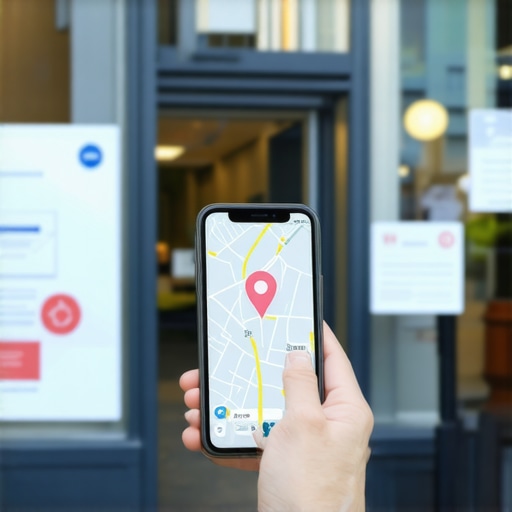
How to prove your physical office is real for Google verification
I spent three months fighting a hard suspension for a plumbing client whose listing was nuked simply because they shared a suite number with a defunct law firm. Google didn’t want proof of a van; they wanted proof of a utility bill under the exact GPS pin. The air in that small office smelled of old diesel and fresh asphalt from the road work outside, a fitting atmosphere for a logistics struggle where every inch of coordinate data mattered. We were not just fighting a software glitch; we were engaging in a high-stakes verification loop where the physics of the office door and the permanent ink on a lease were the only currency that counted. To win, we had to stop thinking like marketers and start thinking like dispatchers managing a fleet of data points through a narrow alley of algorithmic suspicion.
The ghost in the GPS coordinates
To prove your physical location, you must provide a non-stop video recording showing your street sign, entrance, and internal workspace, alongside a matching utility bill or lease agreement. Google relies on these specific artifacts to confirm that a business is a tangible entity rather than a lead generation shell. The algorithm looks for the intersection of official records and real-world visual evidence. If your data does not align, your profile remains in the void. You must realize that proving to Google your physical office is real is the first step in regaining the trust of the local map stack. I have seen countless businesses vanish because they thought a simple photo of a desk would suffice. It does not. The system requires a forensic level of detail that covers the entire journey from the street curb to the point of sale system. When you understand the logic of the local algorithm, you see that a business listing is a proximity beacon. This beacon requires a constant supply of verified location data to stay lit. Many owners find themselves asking why your business is invisible just two blocks away, and often the answer lies in a weak proximity signal that Google cannot verify with confidence.
“Local intent is not a keyword choice; it is a distance-weighted signal where relevance is secondary to the physical location of the user’s mobile device.” – Map Search Fundamental
The virtual office trap that gets your business suspended
Virtual offices and coworking spaces without permanent, private signage and dedicated staffing are the primary triggers for modern Google Business Profile suspensions. The logistics of a legitimate business require a footprint that is not shared with a hundred other entities using the same mailbox. If you are caught in the virtual office trap that gets your business suspended, you must pivot to a model that Google recognizes as a service area or a true storefront. I remember a case where a digital agency tried to rank from a shared lounge. The map pin was accurate to the millimeter, but the behavioral data showed no unique foot traffic. Google saw the glitch. They nuked the listing. To fix this, you need to understand winning back your map spot after a coworking space filter requires showing that your business has a distinct, locked door with your brand on it. The audit process is not about being clever; it is about being honest with the map data. You might need to look at stopping virtual offices from sabotaging your map rankings by securing a lease that the local post office recognizes as a unique suite. Without this, your proximity score will never recover from the zero point.
The three mile radius that determines your revenue
Google effectively limits the visibility of most local businesses to a three mile radius around their verified physical location to ensure searcher relevance. This spatial filter is the invisible wall that keeps your phone from ringing if your pin data is messy. If you want to expand, you have to look at breaking the three mile radius through high-authority citations and authentic customer interactions. The map pack is a dispatch system. It wants to send the user to the closest, most reliable point. If your office is just a shell, the system detects the lack of physical mass and pushes you down. I often suggest a proximity reset to reclaim local rankings when the radius starts to shrink. This involves scrubbing old data and re-verifying the core address with a video that shows the flow of daily operations. You must also consider why proximity based ranking drops happen even to businesses with perfect reviews. Usually, it is a data sync error. Someone changed a phone number on an obscure directory, and now the map pin is drifting in the digital wind.
Local Authority Reading List
- Mastering Local Pack Fix Techniques
- The Essential Local Map Pack Toolkit
- Managing Rankings During a Business Relocation
- Solving Complex Local Penalty Cases
- Case Study: The Citation Cleanup Success
Solving local penalty cases that automated scanners never find
Manual audits are the only way to identify deep-seated location conflicts like hidden duplicate listings or mismatched suite numbers in the USPS database. Automated tools are useful, but they lack the eyes to see that your signage is temporary or that your suite is actually a closet in a basement. You need seo services to fix gmb issues that focus on the gritty details of the physical office. I once found a suspension cause that was just a single digit error in the zip code on an old Yelp listing. That one digit created a ghost location that confused the Google crawl. We had to perform manual listing cleanup for a business with a messy history to wipe the slate clean. This is not about building more links; it is about clearing the path for the GPS signal to reach Google servers without interference. If your business has been deranked, you might need seo services to fix a deranked website that integrate your web data with your map pin. The connection between your site and your office is the foundation of local trust. When that connection breaks, the map pack is the first thing to fall.
The forensic trace of a service area polygon
For service area businesses, the proof of location shifts from the office door to the proof of residence and the presence of branded vehicles at that address. You cannot simply claim an entire city without showing that your trucks actually depart from a specific point. Google uses the geo tagging strategy to verify your service routes based on the photos your team takes in the field. Every time a technician takes a photo of a completed job, the metadata tells Google where that work happened. This creates a polygon of authority. If you are struggling with why your new service area isn’t showing up, it is likely because you haven’t established enough points in that polygon. You should be using customer photos to increase map click through rate and to provide the location signals the algorithm craves. The logistics of search require a constant flow of fresh data. If your profile is static, it is dying. You need a daily checklist for better local search visibility to ensure your signals are consistently reaching the centroid of your target market. Without this discipline, you are just a pin on a map that nobody sees.
Building trust through a manual citation audit
The most effective way to restore a suspended profile is to clean up every mention of your business on the web to ensure perfect NAP (Name, Address, Phone) consistency. This is the digital equivalent of making sure all your shipping manifests match the inventory on the truck. A single discrepancy can trigger a trust score drop. By performing a manual citation audit, you find the toxic data that automated scanners miss. This includes old addresses from five years ago or a variation of your business name that you no longer use. I have seen the citation cleanup move resurrect a dead map pin in less than thirty days. It is about removing the noise so Google can hear the signal. You should also focus on niche citation building because industry specific links move the needle more than generic directories. If you are a plumber, a link from a local plumbing association is worth more than ten links from random web catalogs. This is how you prove to the algorithm that you are a legitimate player in the local economy. The logistics of local SEO are complex, but they follow a clear set of rules. Follow the rules, provide the proof, and the map pack will open for you once again.