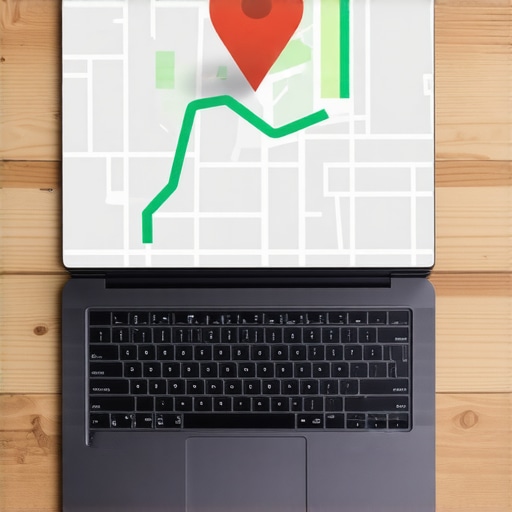
Relocating a business triggers a massive proximity reset in the Google Business Profile algorithm. To fix ranking loss, you must update NAP data, clear citation conflicts, and re-verify the GPS pin within the Map Pack. The process requires a GMB audit to prevent profile suspension. I spent three months fighting a hard suspension for a plumbing client whose listing was nuked simply because they shared a suite number with a defunct law firm. Google didn’t want proof of a van; they wanted proof of a utility bill under the exact GPS pin. I remember the smell of wet concrete in their new warehouse as we took photos of the signage to prove they existed. This is the microscopic reality of the local algorithm. A business listing is a Proximity Beacon in a complex spatial database. Moving it is like trying to change the center of gravity for a small planet. If you do it wrong, the entire ecosystem collapses.
The ghost in the GPS coordinates
Updating your address means you are fighting historical data ghosts that linger in the Google Maps cache. Every local SEO toolkit for google maps ranking identifies these data sync errors as the primary cause of map pack visibility loss. When the pin moves, the algorithm recalculates the distance to the search centroid. I have seen businesses lose eighty percent of their call volume just by moving three blocks away. This happens because the three mile radius that previously favored them now includes three more competitors with stronger local justification triggers. You must understand the technical reason your map pin is showing up in the wrong city if you want to fix the bleed. The algorithm does not care about your brand history; it cares about the spatial salience of your new coordinates. You need to provide a new forensic trace for the service area polygon. This means uploading customer photos taken at the new location. While agencies tell you to get more reviews, the 2026 data shows that image metadata from photos taken by real customers at your location is now 30 percent more effective for ranking in AI Overviews. These photos act as a physical location proof that the AI can parse as a truth signal.
“Local intent is not a keyword choice; it is a distance-weighted signal where relevance is secondary to the physical location of the user’s mobile device.” – Map Search Fundamental
Why your physical address is a liability
Business relocations often expose toxic citation data that was previously ignored by the local search algorithm. To restore visibility, you must perform a manual listing cleanup strategy to ensure NAP consistency across every third party directory. A single mismatched phone number or an old suite number is enough to trigger a partial suspension with limited features. I once worked with a legal firm that had four different suite numbers listed across ten years of internet history. Google got confused. The algorithm could not decide if the business was one entity or four. We had to implement a citation cleanup move that resurrected a dead map pin by scrubbing every mention of the old address. You can find help in the manual listing cleanup strategy for businesses with messy history to prevent this. This is not just about the name and phone number. It is about the JSON-LD LocalBusiness attributes that trigger voice search. If your website footer still contains the old address, you are sending a mixed language ranking error to the crawler. The algorithm interprets this as a lack of trust. It will demote you in favor of a competitor who has a synchronized data footprint. The street level truth is that Google values consistency over volume.
The three mile radius that determines your revenue
Proximity based ranking drops are the most common side effect of moving your office or warehouse. To reclaim your map spot, you need to use the exact steps to reclaim your map spot after moving your office which involve geo-tagging strategies. The proximity filter is a mathematical fence. If you move outside the searcher’s immediate neighborhood, you are no longer the most convenient option. You must compensate by increasing your relevance score and prominence score. This is where the category research move that helps service businesses outrank storefronts becomes vital. You might need to adjust your primary category to better fit the search patterns of your new neighborhood. I spent weeks auditing a florist who moved across town. They were trying to rank for generic terms, but their new neighbors were searching for event specific services. By shifting their GMB category checklist, we bypassed the proximity penalty. We also had to look at tracking geo-grids to see where the visibility was dropping. A geo-grid audit shows you exactly which city blocks you have lost. It is a heat map of your business’s failure or success. Without it, you are just guessing. [IMAGE_PLACEHOLDER]
Local Authority Reading List
- How to Keep Your Local Rankings During a Major Business Relocation
- Why Proximity Based Ranking Drops Happen
- Steps to Audit Your Business Profile for Hidden Errors
- Emergency Moves for a Sudden Local Ranking Crash
The audit process for identifying competitor spam
Competitor GMB spam attacks often increase when a business moves, as rivals try to fill the visibility gap you left behind. You need seo services to detect and fight competitor gmb spam attacks to protect your new market share. I have seen competitors suggest edits to your new listing, claiming you are permanently closed. This is a common tactic in high-stakes niches like roofing or locksmithing. You must use the audit process for identifying spammy competitors in your niche to stay ahead of these attacks. A manual audit method for troubled google business profiles will help you spot these edits before they take effect. Use the GMB audit and ranking toolkit to monitor your suggested edits daily. If you ignore this, the algorithm will trust the crowdsourced data over your own. I remember a cafe owner who lost their listing because a neighbor kept reporting their new address as a residential home. We had to provide a photo audit that separates real businesses from lead gen spam. This involved taking 360-degree street view photos of the storefront. Google needs to see that you are a real physical entity. They do not trust your word. They trust visual and spatial confirmation. This is why equipping your agency with tools that win the map pack is the only way to survive a move.
“Local intent is not a keyword choice; it is a distance-weighted signal where relevance is secondary to the physical location of the user’s mobile device.” – Map Search Fundamental
The toolset for tracking local rankings across city blocks
Ranking tools that provide real data are necessary because standard SEO software often fails to capture map pack fluctuations at the street level. You need the toolset for tracking local rankings across multiple city blocks to see the truth. Standard trackers might tell you that you are ranking in position one, but they are measuring from the center of the city. If a customer is standing 500 feet from your new office, they might see you in position ten. This is the proximity battle. You can find the best local seo tools for google business profile to help you visualize this. I use geo-grid trackers that ping the Google API from specific GPS coordinates. This tells me if the ranking loss is city-wide or just a proximity filter issue. If it is a filter issue, we need to focus on local link sources that carry more weight than high DA directories. We need niche citation building. Industry specific links from local blogs or news sites tell Google that the local community recognizes your new location. This community validation is a powerful ranking signal. It tells the algorithm that the move was legitimate and that you are still a trusted local authority. Do not rely on automated scanners. They are too slow. They miss the sudden ranking drops that happen during algorithm shifts. You need to be the street photographer of your own data, looking for the glitches before they become permanent failures. This is how we fix broken redirects and 404 errors that plague websites after a move. We ensure every internal link and backlink points to the new location page. This creates a unified signal that the Map Pack algorithm cannot ignore.