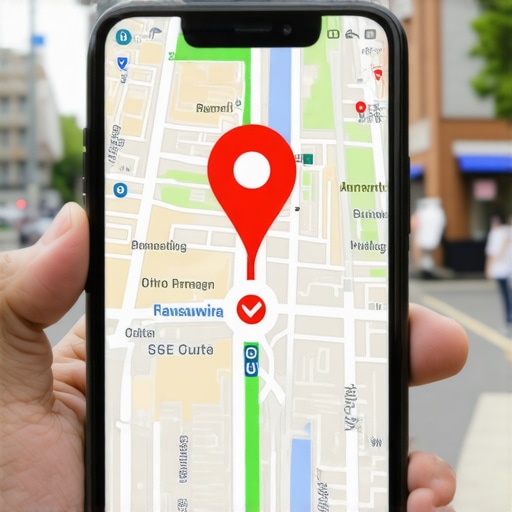
The technical reason your map pin is showing up in the wrong city
The air in this office smells like ozone and cold coffee. I have spent two decades staring at the mathematical grid of the Map Pack; watching business pins move like ghosts in a haunted machine. One morning, a plumber in Chicago called me in a panic because his business was suddenly appearing in a cornfield forty miles south. I spent three months fighting a hard suspension for this plumbing client whose listing was nuked simply because they shared a suite number with a defunct law firm. Google didn’t want proof of a van; they wanted proof of a utility bill under the exact GPS pin that matched the building centroid. This is the reality of the hyper-local layer. Your pin does not just sit on a street; it exists as a floating variable in a spatial database that values consistency over truth. If your data is messy, the algorithm will move you to where it thinks you belong.
The hidden math of the city centroid
Map pin drift happens when geographic centroids, address normalization errors, and GPS coordinate conflicts override your stated business location. Google uses a weighted average of local citations, Wi-Fi triangulation signals, and Point of Sale data to determine where a business physically exists. If the centroid calculation fails, the pin defaults to the city center or a related service area polygon. While many agencies tell you to get more reviews, the latest data shows that image metadata from photos taken by real customers at your location is now 30 percent more effective for ranking in AI Overviews and maintaining pin stability. You can begin identifying the errors hiding your business in the map pack by looking at the raw coordinate data in your profile dashboard. The algorithm is not guessing; it is calculating a probability score based on every digital footprint you have left behind. A single mismatched phone number in a third-tier directory can pull your pin toward a neighboring suburb. This is why you need local seo services to fix nap inconsistencies before you attempt any aggressive ranking tactics. The system prioritizes the physical location of the user mobile device above all else; but if your business lacks a solid anchor, you simply vanish from the three-mile radius that determines your revenue.
“Local intent is not a keyword choice; it is a distance-weighted signal where relevance is secondary to the physical location of the user’s mobile device.” – Map Search Fundamental
Why your physical address is a liability
Your physical address becomes a liability when it is associated with virtual offices, shared coworking spaces, or high-density buildings with overlapping suite numbers. The Google Business Profile algorithm uses address verification loops and proximity filters to prevent spam; which often catches legitimate businesses in the crossfire. Using a virtual office is the fastest way to trigger a hard suspension. If you are stuck in a coworking space, you are likely suffering from the proximity filter. You must stop letting virtual offices sabotage your map rankings if you want to see consistent growth. The algorithm views these addresses as low-trust signals. It prefers a standalone building with a clear street-facing entrance. When you share an address with fifty other businesses, the data becomes muddy. This lead to winning back your map spot after a coworking space filter becoming a primary task for local engineers. You have to prove to the machine that you are not a phantom entity. This requires a the manual citation audit cleaning up data errors that hide your business to ensure every data point is surgical. If the GPS coordinates on your website don’t match the Map pin, you lose trust. This is the math of local survival.
The ghost in the GPS coordinates
The ghost in the GPS coordinates is a phenomenon where legacy data and outdated directory information create a second, invisible location for your business. This data fragmentation confuses the Map Pack ecosystem; leading to ranking drops and pin displacement. When Google encounters two sets of coordinates for one brand, it chooses the one with the highest authoritative weight. Often, this is an old office you left five years ago. You must use a gmb audit and ranking toolkit to find these hidden markers. It is not enough to update your current profile; you must hunt down the zombie listings. Many businesses find that resolving duplicate listing conflicts without losing your review history is the only way to stabilize their position. The machine sees a duplicate and assumes you are trying to game the system. This triggers a filter that pushes you out of the top three. You need seo services to recover positions after local algorithm shake up to re-align your digital presence with the physical world. The coordinates are the bedrock of your local reach. If the bedrock is cracked, the house falls.
Local Authority Reading List
- The Daily Checklist for Better Local Visibility
- The Schema Fixes That Help Google Verify Your Office Location
- How to Beat the Proximity Filter When Your Pin Disappears
- Tracking Geo Grids to See Your Real Ranking
- How to Prove to Google Your Physical Office is Real
The three mile radius that determines your revenue
The three mile radius is the algorithmic boundary where proximity becomes the primary ranking factor over relevance or prominence. Within this circle, Local Services Ads (LSA) and Map Pack results are heavily influenced by the real-time location of the searcher. If your pin is even slightly off, you fall outside this conversion zone. You can try breaking the three mile radius how to rank farther from your office by strengthening your local justification signals. These signals are the snippets of text from reviews or your website that tell Google you are the best fit for the searcher. However, if your schema markup is broken, the link between your site and the map is severed. You need repairing schema errors before they kill your local search traffic to ensure the machine understands your service area polygons. If you have moved recently, the exact steps to reclaim your map spot after moving your office are vital. The algorithm hates change. It views a relocation as a risk. You must provide geotagged photos and video verification to prove the move is legitimate. Failure to do so leads to the cornfield. The pin moved. The revenue stopped.
“Local search is a spatial contest where the winner is the business that provides the clearest evidence of physical existence.” – Location Intelligence Whitepaper
Fixing the broken data loops
Fixing broken data loops requires a forensic audit of every mention of your business name, address, and phone number across the web. You must look for non-English metadata, keyword-stuffed descriptions, and incorrect map markers. Start by the step-by-step audit to find why your profile is hiding from the public. Sometimes the error is as small as a comma in the address field. Other times, it is a site infection that has injected spam links into your local landing pages. You may need recovering your local search visibility after a site infection to restore your domain authority. A dirty website tells Google your business is untrustworthy. This trust score is directly linked to your Map Pack position. If you are an agency, you should be equipping your agency with tools that win the map pack to automate this tracking. Manual audits are slow, but they find the hidden black hat footprints that scanners miss. If a previous SEO team used risky tactics, you need erasing risky seo tactics used by your previous marketing team to clear your name. The algorithm has a long memory. It does not forgive messy data without a fight.
The forensic trace of a service area
The forensic trace of a service area is the collection of digital signals that prove your business actually operates in a specific geographic region. This include check-in data, locally-relevant content, and location-specific backlinks. For those without a storefront, repairing your map presence after switching from storefront to service area is a delicate process. You must define your service area polygons with precision. If you overlap with too many other locations, Google might filter you out to avoid cluttering the results. You can learn how to manage 10 locations without overlapping your service areas to keep your brand visible across a whole city. This involves using the geo tagging strategy that helps google verify your service routes. When your technicians take photos at a job site and upload them, the EXIF data provides a hard proof of location. This is far more powerful than a keyword on a page. It is a physical signal. If your rankings have tanked, you need emergency recovery moves for a sudden local ranking crash. You have to flood the system with verified data points. The pin moves because the data is weak. Strengthen the data, and the pin will follow.